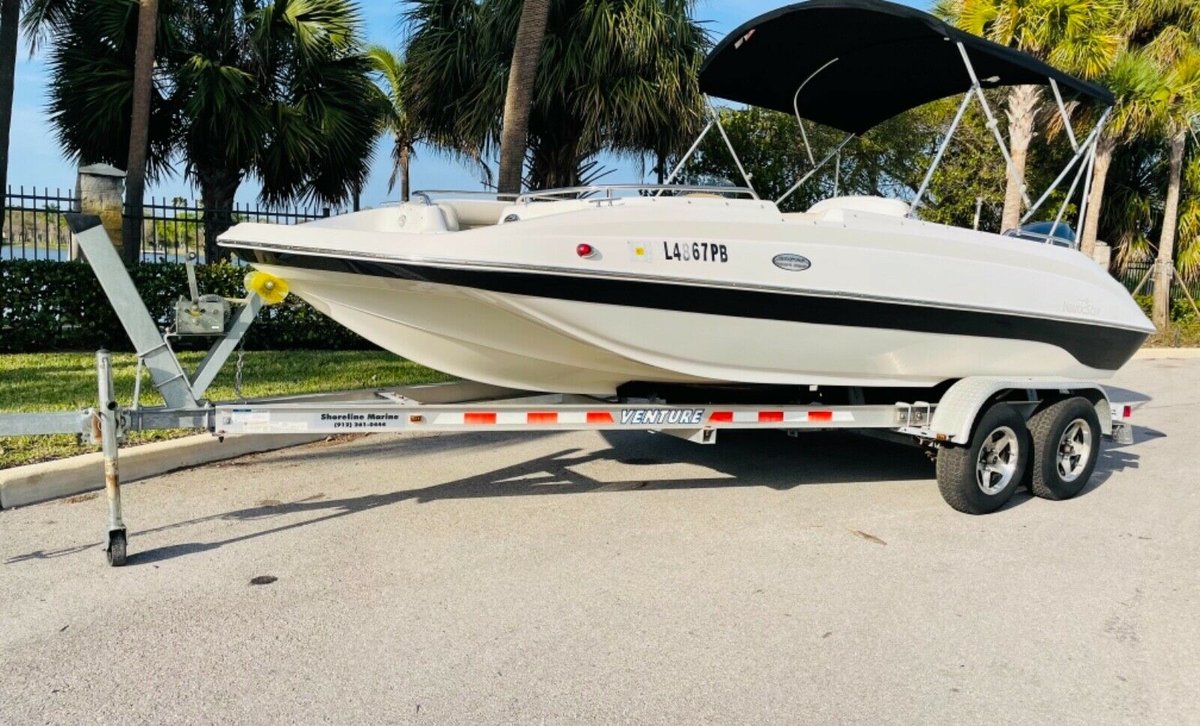
For any owner of a 2006 NauticStar 205 DC, diving into the boat's electrical system can feel like navigating a complex maze without a map. That's precisely why having access to accurate 2006 NauticStar 205 DC Electrical Wiring Diagrams isn't just a convenience; it's a fundamental necessity for troubleshooting, maintenance, and safe upgrades. These diagrams serve as the definitive blueprint for every circuit, component, and connection on your vessel, transforming guesswork into informed action.
Think of these diagrams as the secret language of your boat's power — the key to understanding why your bilge pump isn't firing, why your navigation lights flicker, or how to properly integrate that new GPS unit without frying your existing electronics.
At a Glance: Understanding Your NauticStar's Electrical Diagrams
- Crucial for Maintenance: Essential for diagnosing issues, performing repairs, and preventing future problems.
- Safety First: Helps you understand proper grounding, fusing, and wire sizing to prevent electrical fires or shocks.
- Upgrade Ready: Provides the roadmap for safely adding new accessories like fishfinders, stereos, or trim tabs.
- Time Saver: Locating a fault or tracing a wire becomes significantly faster with a diagram in hand.
- Empowers Ownership: Gives you confidence and control over your boat's most vital systems.
- Manufacturer Specific: Diagrams are unique to the model and year, making generic diagrams less reliable.
Why Your 2006 NauticStar 205 DC Needs Its Electrical Blueprint
Your 2006 NauticStar 205 DC, while a robust and reliable vessel, relies heavily on its electrical nervous system. From starting the engine to powering your navigation lights for a safe return after sunset, electricity is the lifeblood of your boat. Without proper diagrams, any electrical hiccup can quickly escalate from a minor annoyance to a major headache, or worse, a safety hazard.
Imagine you're out on the water, and your livewell pump suddenly stops working. Do you start pulling wires at random? Or do you consult a diagram that clearly shows the pump, its switch, the fuse protecting it, and the path it takes to the battery? The latter is not just more efficient; it's safer and far more effective. These diagrams illuminate the path, literally, for every electron flowing through your NauticStar. They demystify the spaghetti of wires behind the console, making sense of what might otherwise appear as chaos.
The Anatomy of Your NauticStar's Electrical System
Before you can effectively use 2006 NauticStar 205 DC Electrical Wiring Diagrams, it helps to grasp the basic components common to most marine electrical systems. Your NauticStar's electrical backbone typically consists of several key subsystems:
- Power Generation & Storage: This includes your starting battery (or batteries), house battery (for accessories), the engine's alternator for charging, and a battery switch to manage power flow.
- Engine Electrics: The starter motor, ignition system, engine sensors, trim/tilt motor, and the associated wiring that allows your outboard to run and communicate with your gauges.
- Distribution & Protection: This is where circuit breakers and fuse panels come into play. They protect individual circuits from overcurrents, preventing damage to components or, more critically, fires. The main bus bars distribute power throughout the boat.
- Accessories & Lighting: All your onboard electronics like your stereo, GPS, fishfinder, livewell pumps, bilge pumps, horn, and, of course, your navigation and courtesy lights. Each of these will have its own dedicated circuit, typically protected by a fuse or breaker.
- Grounding System: Absolutely critical for safety and proper function. All negative (ground) wires eventually return to a common point, usually connected to the battery's negative terminal and often bonded to other metal components on the boat.
Understanding these foundational elements makes interpreting your 2006 NauticStar 205 DC Electrical Wiring Diagrams much more intuitive. Each system will be represented, showing how they connect and interact.
Decoding the Diagram: What to Look For
When you get your hands on 2006 NauticStar 205 DC Electrical Wiring Diagrams, they might look intimidating at first glance. However, they follow a universal language of symbols, colors, and conventions. Here’s what to focus on:
- Symbols: Every component—battery, switch, fuse, light, pump, motor—is represented by a standard electrical symbol. Familiarizing yourself with these common marine electrical symbols will greatly speed up your diagram reading.
- Wire Color Codes: Marine industry standards often dictate specific wire colors for certain functions (e.g., red for positive, black for negative, yellow/red stripe for ignition, etc.). NauticStar will likely follow these or have a consistent internal system. A legend on the diagram should explain any proprietary color codes.
- Wire Gauges: Diagrams will often indicate the wire size (e.g., 16 AWG, 10 AWG). This is crucial for ensuring the wire can handle the current drawn by a component without overheating. Overloaded wires are a significant fire risk.
- Circuit Protection: Look for fuses (represented by a broken line with a box) and circuit breakers (often a square with a diagonal line). The diagram will specify the amperage rating for each, which is vital for replacement.
- Connections & Splices: Diagrams show where wires connect to components, switches, or where multiple wires join (splices). This is a prime area for troubleshooting if a connection has corroded or come loose.
- Component Location: While diagrams are schematics, some might include general routing paths or component locations, helping you find them on the boat.
Navigating marine electrical systems requires not just theoretical knowledge but practical tips. For instance, knowing the difference between a high-current circuit and a low-current signal wire is crucial for safety and effective troubleshooting. You might find more general boat electrical maintenance tips that apply broadly to all boats, but the specifics of your 205 DC are in its unique diagrams.
Where to Find Your 2006 NauticStar 205 DC Electrical Wiring Diagrams
This is often the million-dollar question for boat owners. Unfortunately, simply searching online doesn't always yield immediate results for specific boat models and years. Here’s a strategic approach:
- Your Owner's Manual: Start here. While not always exhaustive, many owner's manuals for a 2006 NauticStar 205 DC will include basic wiring schematics for key systems.
- NauticStar Marine Website/Dealer: The most direct route is to contact NauticStar Marine directly or reach out to an authorized NauticStar dealer. Provide your hull identification number (HIN) and model year. They often have access to service manuals and diagrams that aren't publicly distributed. Be prepared that older models might require a bit more digging.
- Online Boating Forums & Communities: Dedicated NauticStar owner forums or general boating forums can be goldmines. Other owners who have faced similar issues or performed upgrades might have copies of diagrams they're willing to share. A search for "2006 NauticStar 205 DC wiring diagram" within these communities could be highly fruitful.
- Service Manuals: If a comprehensive service manual exists for your specific model and year, it will almost certainly contain the complete electrical schematics. These are less common for direct consumer purchase but might be available through dealers or specialized marine repair shops.
Remember, the goal is to View 2006 Nauticstar 205 DC schematics that are precise to your boat's build year and model, not a generic NauticStar diagram from a different era or model.
Troubleshooting Common Electrical Gremlins on Your 205 DC
With your 2006 NauticStar 205 DC Electrical Wiring Diagrams in hand, you're ready to tackle common electrical issues. The process often follows a logical progression.
Essential Tools for Marine Electrical Work
Before you even start, gather your toolkit. Having the right tools makes the job easier and safer:
- Multimeter: Absolutely indispensable for checking voltage, current (with an inductive clamp meter), and continuity.
- Wire Strippers/Crimpers: For making proper, secure connections.
- Heat Gun: Essential for heat-shrink connectors, which are vital for marine environments.
- Test Light: A quick way to check for power at a specific point.
- Flashlight/Headlamp: Crucial for working in cramped, dark compartments.
- Assortment of Fuses: Always have spares of the correct amperage.
- Corrosion Inhibitor Spray/Dielectric Grease: To protect connections.
From Fuse Box to Component: Tracing the Fault
When something electrical stops working, follow these steps:
- Isolate the Circuit: Identify the problematic system on your diagram (e.g., bilge pump, navigation lights).
- Check the Fuse/Breaker: Locate the corresponding fuse or circuit breaker on your panel using the diagram. Is it blown? Is the breaker tripped? Replace the fuse with one of the exact same amperage or reset the breaker.
- Verify Power at the Switch: With the battery switch on, use your multimeter or test light to check for voltage at the input side of the switch for that circuit. If no power, trace backward on the diagram towards the battery or main distribution panel.
- Check Power at the Component: If power reaches the switch, flip the switch to "on" and check for power at the output side of the switch. Then, trace the wire to the component itself (e.g., the bilge pump motor, the light fixture) and check for power there.
- Check Ground Connection: Many electrical problems stem from poor ground connections. Use your multimeter to check for continuity between the negative terminal of the component and the main boat ground (usually the battery's negative terminal). A good ground connection is paramount; corrosion here is a silent killer of marine electrical systems.
- Component Test: If power and ground are both present at the component, the component itself might be faulty.
Remember to disconnect battery power before performing any significant work, especially when dealing with wiring or making new connections. If you're encountering persistent issues with your marine electronics, you might want to delve into troubleshooting common marine electronics issues more broadly, as the principles often overlap.
Expanding Your Electrical Horizons: Adding New Accessories Safely
Your 2006 NauticStar 205 DC Electrical Wiring Diagrams aren't just for fixing things; they're also invaluable for adding new equipment. Whether it's a new trolling motor, an upgraded stereo, or LED deck lights, doing it correctly prevents overloading existing circuits and creating fire hazards.
- Plan Your Installation: Determine where the new accessory will be mounted and how the wires will be routed. Consider moisture exposure and chafing points.
- Calculate Current Draw: Check the accessory's specifications for its maximum current draw (amperage). This is crucial for selecting the correct wire gauge and fuse size.
- Choose the Right Wire: Refer to marine wire gauge charts (ABYC standards are a good reference) to select the appropriate gauge based on the current draw and the length of the wire run. Always use marine-grade tinned copper wire, which resists corrosion.
- Add Dedicated Circuit Protection: Never tap into an existing circuit without ensuring it can handle the additional load. Ideally, run a new circuit from your fuse panel or add a new fuse block if your current one is maxed out. Always install an appropriately sized fuse or breaker as close to the power source as possible.
- Secure Connections: Use high-quality, marine-grade connectors (heat-shrink crimp connectors are preferred). Ensure all connections are tight, waterproof, and protected from vibration.
- Proper Grounding: Run a dedicated ground wire from your new accessory back to a main grounding bus or directly to the house battery's negative terminal. Do not "daisy chain" grounds.
Understanding understanding marine battery systems is also critical here, as adding accessories directly impacts your battery bank's capacity and charging requirements.
Beyond the Basics: Advanced Tips for Longevity and Performance
Beyond immediate repairs and installations, your 2006 NauticStar 205 DC Electrical Wiring Diagrams support long-term care and optimal performance.
- Regular Inspections: Periodically inspect visible wiring for chafe marks, corrosion, or loose connections, especially in high-vibration areas like near the engine.
- Keep Connectors Clean: Saltwater is incredibly corrosive. Apply dielectric grease to electrical connections and use corrosion-inhibiting sprays where appropriate.
- Labeling: If you modify or add new circuits, clearly label them at the fuse panel and near the components. Future you (or a future owner) will thank you.
- Documentation: Keep your diagrams in a dry, accessible place, perhaps laminated or in a waterproof pouch. Make notes on them for any modifications you make.
- Professional Check-ups: Even with the diagrams, sometimes a professional marine electrician can spot subtle issues or offer insights into system optimization that you might miss.
Common Questions About NauticStar 205 DC Electrical Systems
Here are some quick answers to frequently asked questions about your boat's electrical setup:
- Q: Can I use automotive wire on my boat?
- A: No. Marine environments demand tinned copper wire, which is far more resistant to corrosion and vibration than standard automotive wire. Always use marine-grade components.
- Q: Why do my fuses keep blowing on a particular circuit?
- A: This usually indicates an overload or a short circuit. Check the accessory's current draw, ensure the wire gauge is correct, and thoroughly inspect the wiring for any damage or chafing that could be causing a short to ground. Never replace a fuse with a higher amperage fuse, as this creates a serious fire hazard.
- Q: What's the difference between a starting battery and a house battery?
- A: A starting battery is designed to deliver a large burst of current for a short time (to start the engine). A house battery is a deep-cycle battery, designed to provide a steady, lower current over a long period for accessories without damaging the battery. Many 205 DCs might have a single battery for both or a dual-purpose battery.
- Q: My gauges aren't working, but everything else is. What's wrong?
- A: First, check the fuse for the instrument panel. Often, gauges are on a separate circuit. Then, inspect the wiring and connections behind the dash. A common issue is a loose ground wire for the entire gauge cluster or individual gauges.
Safety First: Always Prioritize Marine Electrical Best Practices
Working with electricity, especially in a marine environment, carries inherent risks. Ignoring proper procedures can lead to serious injury, fire, or even loss of life. Before touching any wiring on your 2006 NauticStar 205 DC:
- Disconnect Power: Always turn off your battery switch(es) and disconnect the negative terminal(s) from your battery bank before performing any electrical work.
- Use Insulated Tools: Prevents accidental short circuits and shocks.
- Work in a Dry Environment: Water and electricity are a dangerous combination.
- Wear Eye Protection: Sparks and flying debris are always a possibility.
- Follow ABYC Standards: The American Boat & Yacht Council (ABYC) sets the standards for safe boat electrical systems. While you might not be a certified electrician, understanding their principles (like proper wire sizing, fusing, and grounding) is vital.
Being aware of marine electrical safety best practices isn't just a suggestion; it's a non-negotiable requirement for any boater.
Empowering Your NauticStar Ownership Journey
The search for and understanding of your 2006 NauticStar 205 DC Electrical Wiring Diagrams is a crucial step in becoming a truly informed and self-reliant boat owner. These diagrams are more than just lines and symbols; they represent the intricate network that brings your vessel to life. By taking the time to acquire, study, and understand them, you're not just preparing for potential problems—you're proactively ensuring the safety, reliability, and enjoyment of your NauticStar for every adventure ahead. So, go forth, find those diagrams, and gain the confidence that comes with knowing your boat inside and out.